
Whether you’re new to firearms or expanding your knowledge, this glossary provides clear, straightforward definitions of commonly used ammunition terminology. From bullet designs and cartridge components to measurements and performance specifications, it offers quick explanations that help you understand what you’re purchasing and using.
You’ll find terms covering ammunition types (FMJ, hollow point, tracer), technical specifications (caliber, grain weight, ballistic coefficient), firearm components (bore, primer, casing), and practical applications (range ammunition, plinking, reloading).
In this glossary, you’ll learn:
- How different bullet types perform and when to use them
- What technical specifications mean for accuracy and effectiveness
- Key safety and compatibility considerations when selecting ammunition
Ballistic Coefficient
A numerical measurement that describes how efficiently a bullet travels through air by indicating its ability to overcome air resistance or drag. The BC value is determined by the bullet’s weight, diameter, and shape, with streamlined bullets having higher coefficients than blunt ones.
For example, shooters looking for .308 ammunition will find that different bullet designs in this caliber offer varying BC values, with match-grade options typically ranging from 0.400 to 0.600 depending on bullet weight and construction.
The following table summarizes typical BC ranges by bullet shape, along with their long-range performance and common applications:
| Bullet Shape | BC Range | Long-Range Performance | Example Use |
| Round nose | 0.100 – 0.150 | Poor | Close-range handgun shooting |
| Flat nose/ wadcutter | 0.080 – 0.120 | Poor | Paper target shooting |
| Full Metal Jacket | 0.250 – 0.400 | Moderate | Military ball ammunition |
| Hunting bullets (SP/HP) | 0.300 – 0.500 | Good | General hunting applications |
| Match/Target | 0.500 – 0.700+ | Excellent | Long-range precision shooting |
Brass Casing
The cylindrical metal container that holds all components of a cartridge together, including the primer, propellant, and bullet. It is typically made from a copper-zinc alloy (brass) due to its durability, corrosion resistance, and ability to expand and contract during the firing cycle.
When a firearm is discharged, the casing expands to seal the chamber and contain the gases produced by the burning propellant. After firing, the casing is ejected from the firearm and can often be collected and reused in the reloading process.
Caliber
Caliber refers to the nominal diameter of a bullet or the internal diameter of a firearm’s barrel, serving as the primary measurement for ammunition compatibility. In the United States, caliber is typically expressed in inches (.45 caliber) or hundredths of an inch (such as .308), while international standards often use millimeters, such as in 9mm ammo.
It’s essential to match ammunition caliber to your firearm’s specifications, as using incorrect caliber ammunition can result in serious injury or equipment damage.
Cartridge
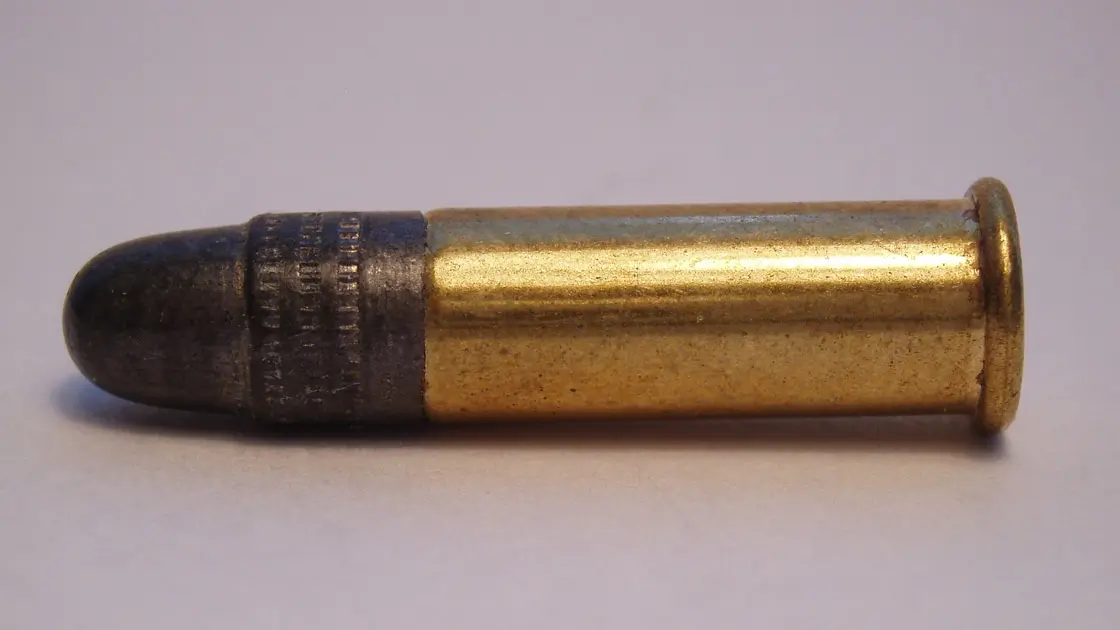
A cartridge is a complete unit of ammunition that contains all components necessary to fire a single shot from a firearm. It consists of four main parts: the case (typically brass or steel), primer, propellant (gunpowder), and projectile (bullet). When the firing pin strikes the primer, it ignites the propellant, creating gas pressure that propels the bullet down the barrel.
Center Fire
Centerfire ammunition features a primer located in the center of the cartridge base, which ignites the propellant when struck by the firearm’s firing pin. This design is distinct from rimfire ammunition, where the primer is contained within the rim of the case.
Centerfire cartridges are typically reloadable since the primer can be replaced after firing, making them more economical for high-volume shooters. Common centerfire calibers include 9mm, .45 ACP, .223 Remington, and .308 Winchester.
The following table summarizes the key differences between centerfire and rimfire ammunition:
| Feature | Centerfire | Rimfire |
| Primer Location | Center of the cartridge base | Within the rim |
| Reloadable | Yes | No |
| Typical Calibers | 9mm, .45 ACP, .223, .308, .30-06 | .22 LR, .22 WMR, .17HMR |
| Power Level | Low to very high | Low to moderate |
| Cost per Round | Higher | Lower |
| Common Uses | Defense, hunting, military, target | Training, plinking, small game |
| Pressure Capability | High | Limited |
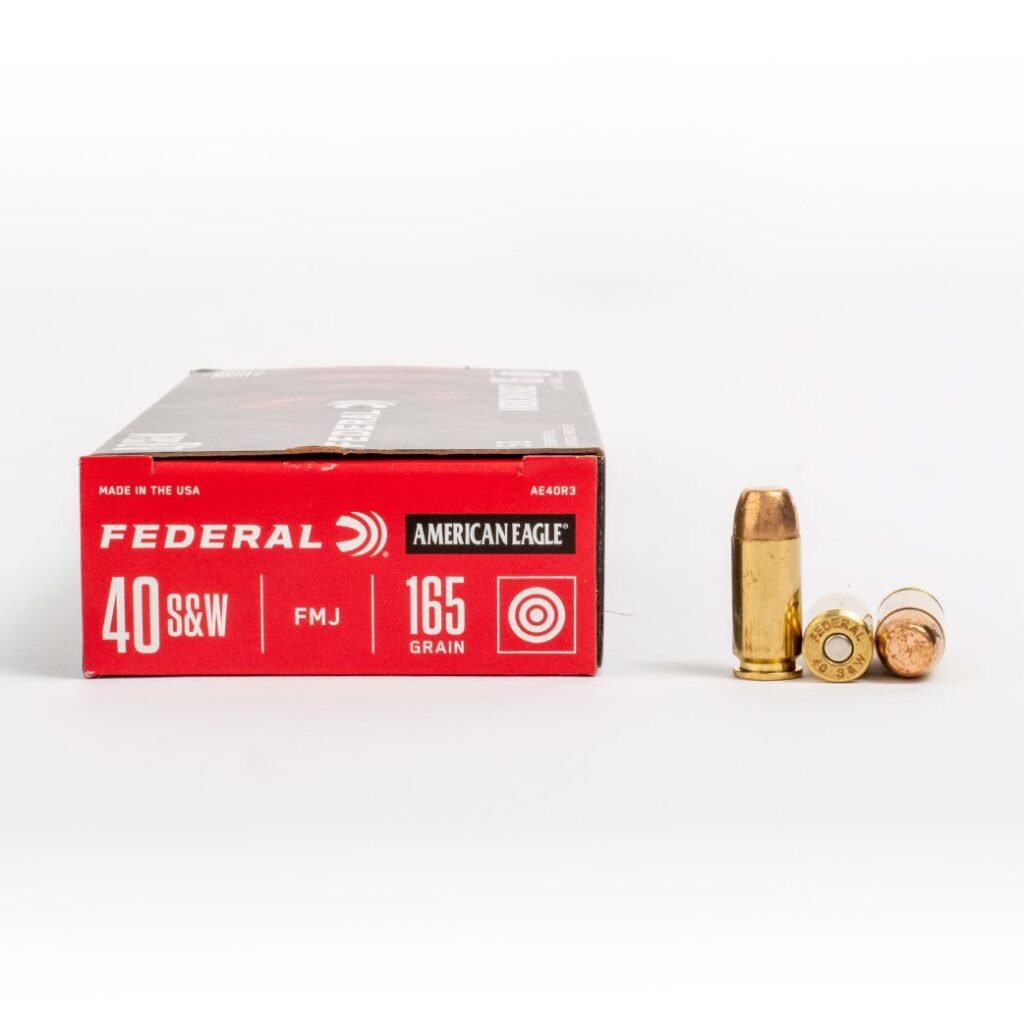
Full Metal Jacket (FMJ)
A bullet design in which a soft lead core is completely encased in a harder metal shell, typically made of copper, brass, or steel alloy. The jacket covers the entire bullet except for the base, preventing lead exposure and reducing barrel fouling.
Due to its design, FMJ bullets tend to penetrate deeply with minimal expansion, making them less suitable for hunting or personal defense compared to expanding bullet designs. This ammunition type is often referred to as “ball ammunition” in military contexts.
Gauge
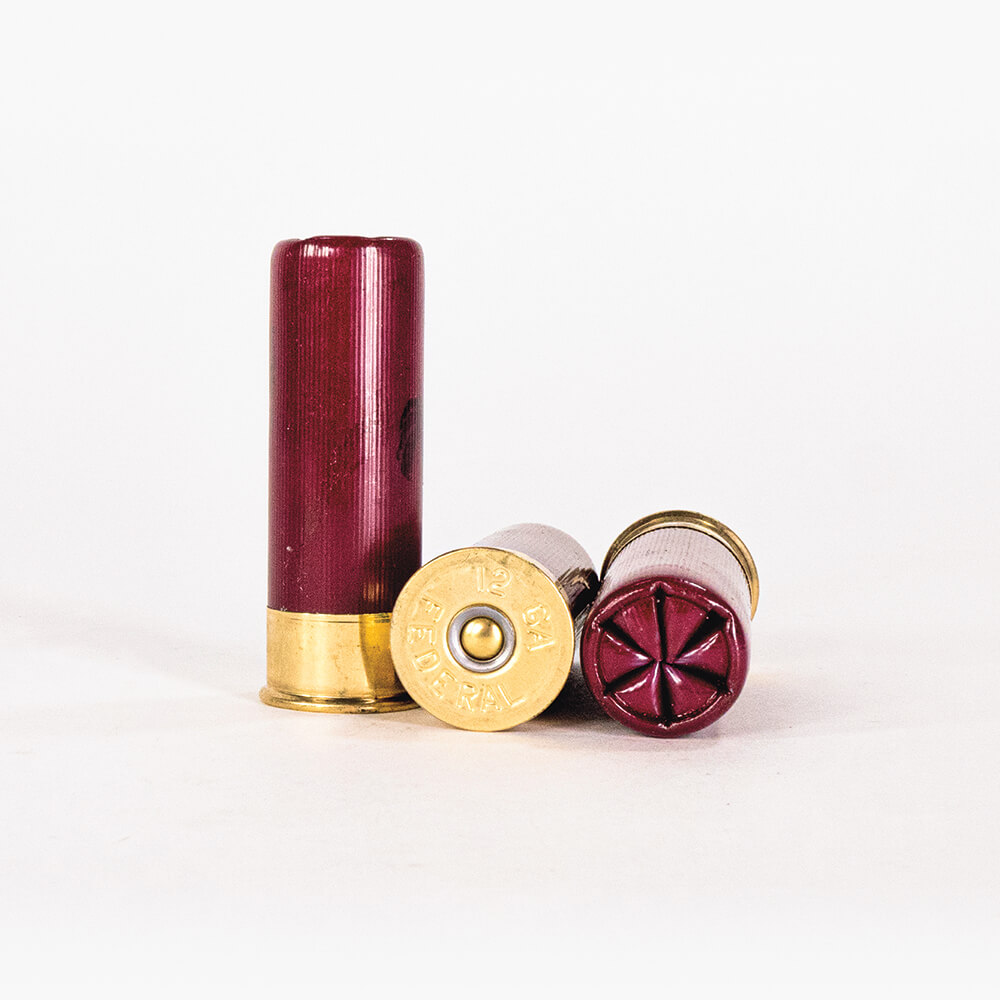
A gauge is a measurement system used to describe the bore diameter of shotguns and shotgun shells. The gauge number is based on how many lead balls of that barrel’s diameter would equal one pound; for example, twelve lead balls fitting a 12-gauge barrel would weigh one pound total.
Grain Weight
A unit of measurement used to specify the weight of bullets, propellant powder, and other ammunition components, where one grain equals 1/7000 of a pound or approximately 64.8 milligrams. Bullet weights typically range from 20 grains for small rimfire cartridges to over 700 grains for large-caliber rifle rounds.
Hollow Point (HP)
A hollow point is a type of bullet designed with a cavity in the tip that causes the projectile to expand upon impact with a target. This expansion increases the bullet’s diameter, creating a larger wound channel and transferring more energy to the target.
Hollow-point ammunition is commonly used by law enforcement and civilians for self-defense because the expansion typically prevents the bullet from passing completely through the target, reducing the risk of unintended injury to bystanders.
Jacketed Hollow Point (JHP)
A bullet design featuring a hollowed cavity at the tip and a metal jacket (typically copper) covering the lead core along the sides. Upon impact with a target, the hollow point is engineered to expand outward, creating a larger wound channel while the jacket helps control the expansion for consistent performance.
The table below provides typical specifications for hollow point ammunition across various popular calibers:
| Caliber | Grain Weight Range | Typical Muzzle Velocity (fps) | Muzzle Energy (ft-lbs) |
| 9mm | 88-147 gr | 1,150 – 1,250 | 350 – 450 |
| .40 S&W | 141-180 gr | 1,000 – 1,150 | 400 – 500 |
| .45 ACP | 175-230 gr | 850 – 1,000 | 400 – 500 |
| .38 Special | 95-158 gr | 850-950 | 250 – 350 |
| .357 Magnum | 110-180 gr | 1,250 – 1,450 | 500 – 700 |
| 10mm | 155-200 gr | 1,200 – 1,300 | 550 – 700 |
| .380 ACP | 85-102 gr | 950 – 1,050 | 200 – 250 |
Magnum
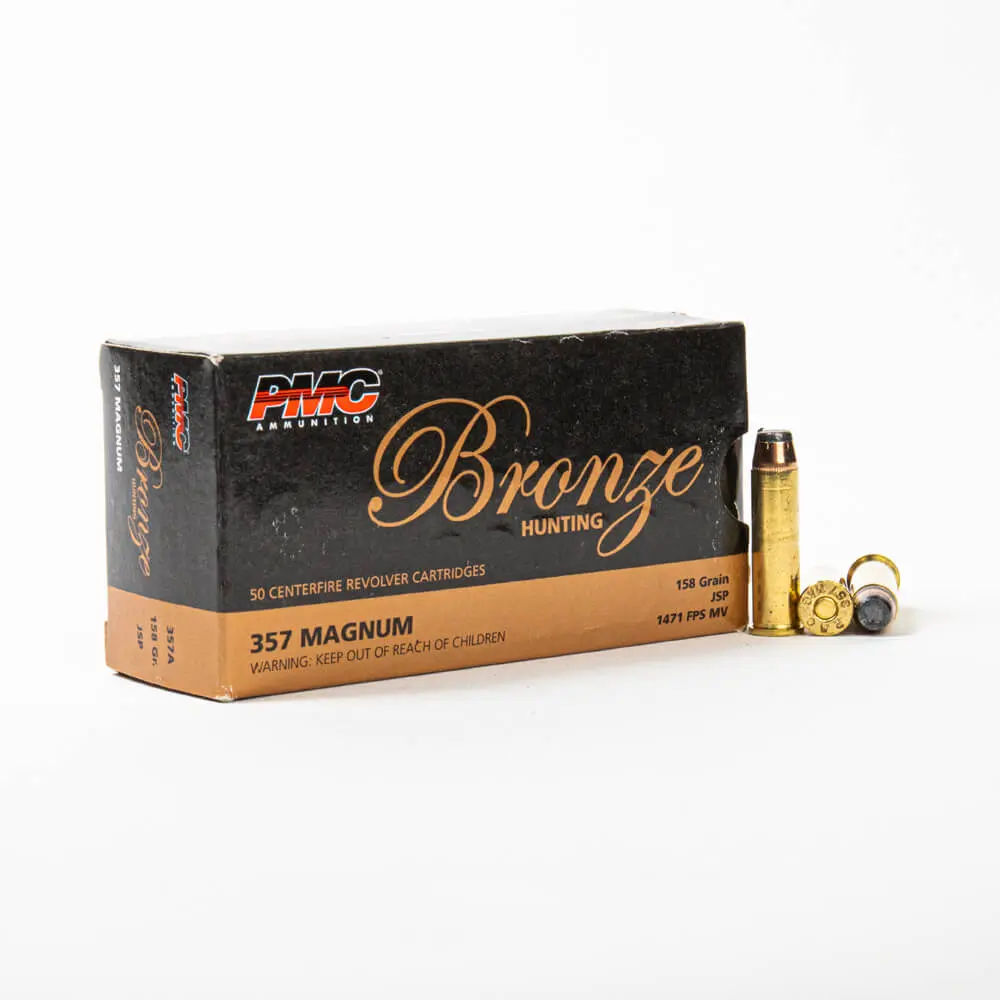
A magnum cartridge is a firearm ammunition designation indicating a round loaded to higher pressures and velocities than standard cartridges of similar dimensions. These cartridges typically contain more propellant and are designed to deliver increased energy, flatter trajectory, and greater effective range.
Muzzle Velocity
The speed at which a bullet travels as it exits the barrel of a firearm. It is typically measured in feet per second (fps) or meters per second (m/s). This measurement is taken at the muzzle, the front end of the barrel, before external factors like air resistance significantly affect the projectile’s speed.
Plinking
Plinking is informal target shooting, typically done for recreation and practice rather than formal competition or hunting. The term comes from the “plink” sound made when a bullet strikes metal targets like cans, bottles, or steel plates. This activity is popular among shooters of all skill levels as an affordable way to improve marksmanship and enjoy the shooting sports.
Primer
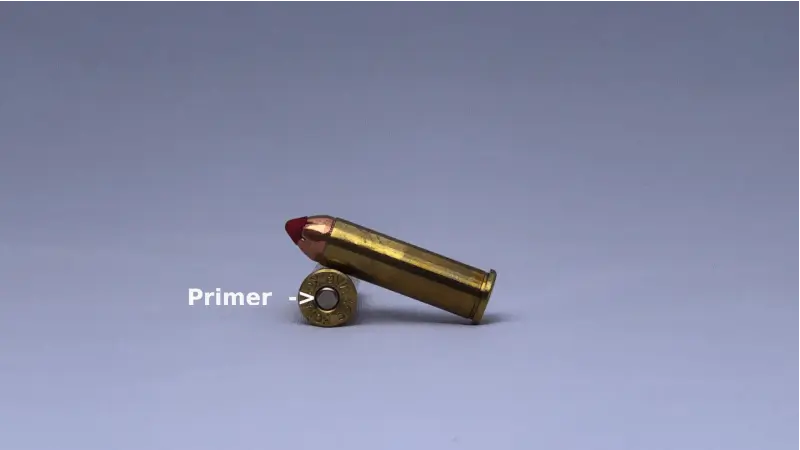
A small metal cup containing a pressure-sensitive explosive compound that sits at the base of a cartridge and serves as the ignition source for ammunition. When the firearm’s firing pin strikes the primer, it creates a spark that ignites the gunpowder (propellant) inside the cartridge case, generating the gas pressure needed to propel the bullet.
Range Ammunition
Ammunition specifically designed and manufactured for practice, training, and target shooting at shooting ranges. This type of ammunition typically features full metal jacket (FMJ) bullets that provide reliable feeding and consistent performance at a lower cost than specialized hunting or defensive rounds.
Reloadable Brass
Ammunition cartridge cases made from brass alloy that are designed and manufactured to withstand multiple firing and reloading cycles.
After being fired, these cases can be cleaned, inspected, resized, and fitted with new primers, powder, and bullets to create functional ammunition again. Brass is preferred for reloading due to its durability, malleability, and resistance to corrosion.
Rimfire
A type of cartridge in which the primer compound is contained within the hollowed rim of the cartridge case, rather than in a central primer pocket. When the firing pin strikes the rim of the case, it crushes the priming compound against the edge of the chamber, creating the spark needed to ignite the gunpowder.
The following table compares the performance characteristics of rimfire ammunition with various centerfire and shotgun ammunition types:
| Feature | Rimfire (.22 LR) | Centerfire Pistol (9mm) | Centerfire Rifle (.223) | Shotgun (12 ga) |
| Muzzle Velocity | 1,000–1,400 fps | 1,100–1,400 fps | 2,800–3,200 fps | 1,200–1,600 fps |
| Muzzle Energy | 100–200 ft-lbs | 300–500 ft-lbs | 1,200–1,400 ft-lbs | 1,500–2,500 ft-lbs |
| Effective Range | 50–100 yards | 25–50 yards | 300–600 yards | 25–50 yards |
| Recoil Level | Very Low | Low–Moderate | Moderate–High | Moderate–High |
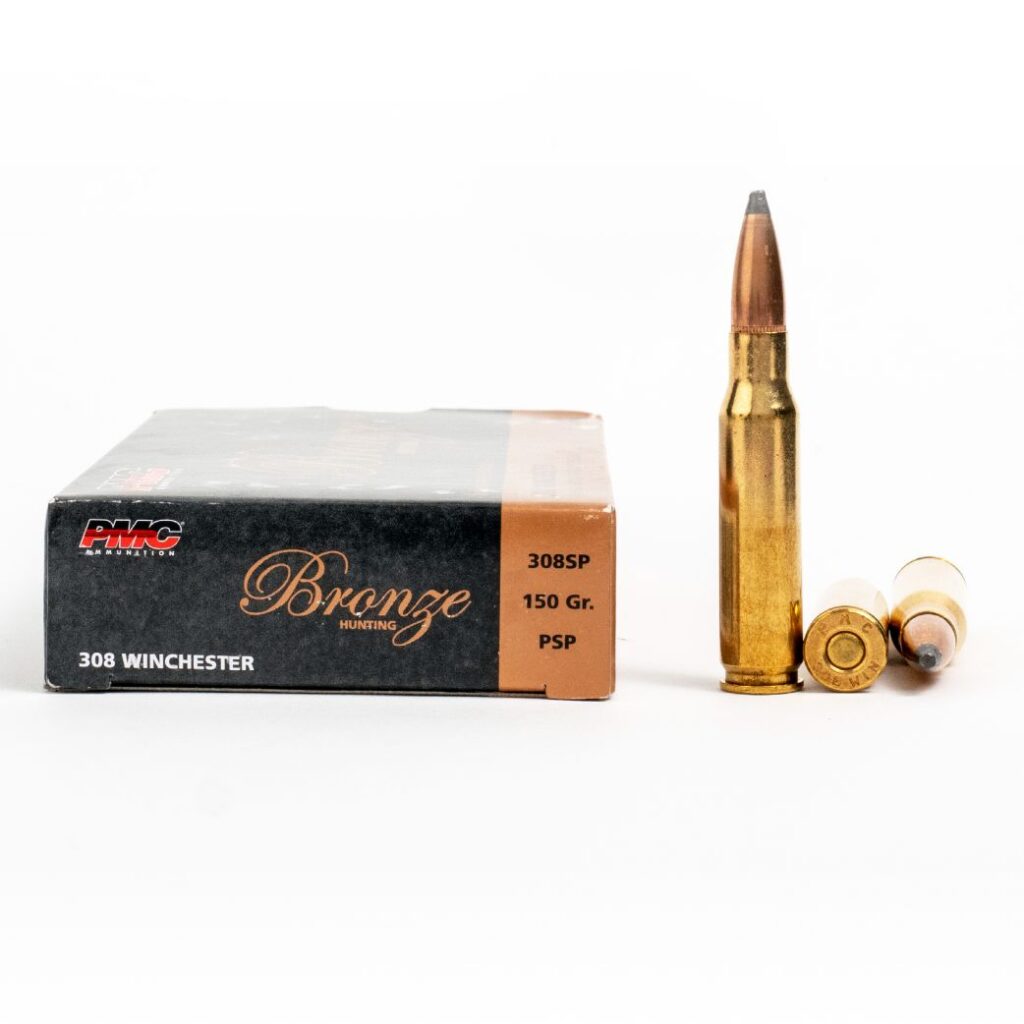
Soft Point (SP)
A bullet design featuring a partial metal jacket with an exposed lead tip at the front of the projectile. Upon impact, the exposed soft lead tip deforms and expands in a controlled manner, transferring energy more efficiently to the target. This expansion increases the bullet’s diameter, creating a larger wound channel while typically retaining most of its mass for adequate penetration.
Steel Case Ammunition
Ammunition featuring cartridge cases manufactured from steel rather than traditional brass, typically coated with lacquer, polymer, or zinc to prevent corrosion and aid extraction. Steel-cased rounds are generally less expensive to produce and purchase, making them a cost-effective option for high-volume training and practice shooting.
Target Ammunition
Ammunition specifically manufactured for recreational shooting and practice at shooting ranges, designed to offer consistent accuracy and reliable performance at an economical price point. Target ammunition typically features full metal jacket (FMJ) bullets that reduce barrel fouling and provide predictable ballistics.
Total Metal Jacket (TMJ)
A bullet design in which the entire projectile, including the base, is completely encased in a copper or brass jacket with no exposed lead. Unlike traditional full metal jacket ammunition, TMJ rounds fully cover the bullet base, significantly reducing lead vapor and particulate exposure during firing.
Wadcutter
A wadcutter is a bullet with a completely flat nose and sharp shoulder edges, designed specifically for paper target shooting. The flat profile cuts clean, circular holes in targets, making it easy to score competition hits accurately. This design differs from round-nosed or pointed bullets that can tear irregular holes in paper.