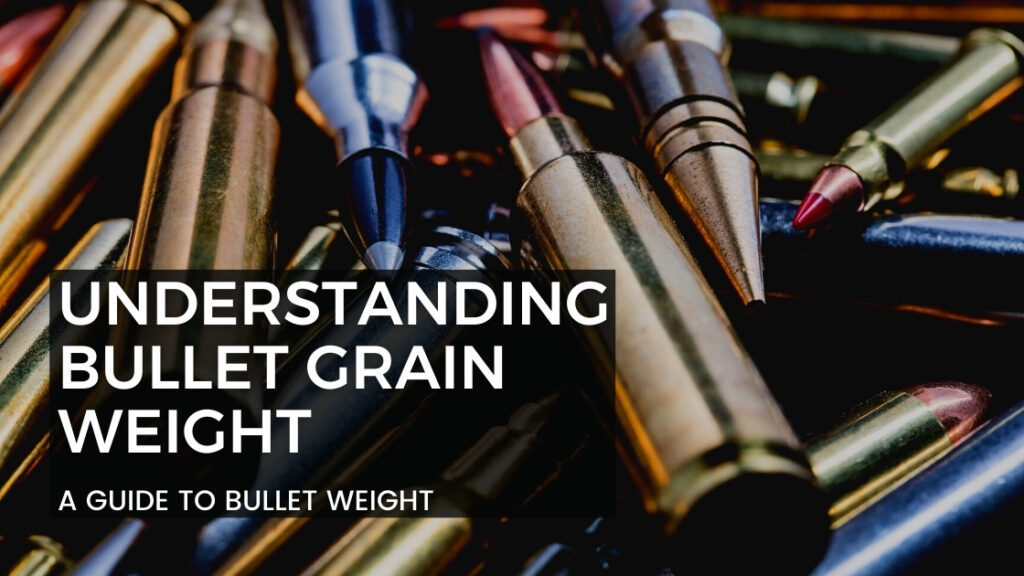
Bullet grain weight is a crucial concept for anyone involved in shooting sports or the firearms industry. Understanding the weight of a bullet and how it affects its performance can help shooters make informed decisions when selecting ammunition and optimize the performance of their firearms (not sure what rifle is right for you to start with, we’ve got you covered!). In this article, we will explore seven key things that you need to know to understand bullet grain weight. Whether you’re a novice shooter or an experienced gun enthusiast, this guide will provide you with valuable insights into the world of bullet grain weight and how it impacts bullet performance. So, let’s dive in and explore the importance of bullet grain weight!
Definition of Bullet Grain
Bullet grain weight refers to the weight of a bullet, measured in grains. One grain is equivalent to approximately 0.0648 grams. The weight of a bullet is an important factor in determining its performance. The heavier the bullet, the more force it will generate when fired, which can affect the bullet’s trajectory and stopping power. Understanding the concept of bullet grain weight is crucial for anyone who wants to make informed decisions when selecting ammunition for their firearm.
Importance of Bullet Grain
The weight of a bullet, measured in grains, is a crucial factor that affects the performance of the bullet. The weight of the bullet can affect its trajectory, accuracy, and stopping power. For example, a heavier bullet may have greater penetration and stopping power, but may also have a slower velocity and shorter range. On the other hand, a lighter bullet may have a faster velocity and longer range, but may also have less penetration and stopping power. Understanding the importance of bullet grain weight can help shooters select the right ammunition for their firearm and optimize its performance.
Matching Bullet Weight to Firearm
Matching the weight of the bullet to the specific firearm being used is important, as different firearms have different barrel lengths and rifling rates that may affect bullet performance. For example, a firearm with a shorter barrel may benefit from a lighter bullet, as the shorter barrel may not provide enough space for the bullet to fully stabilize. On the other hand, a firearm with a longer barrel may benefit from a heavier bullet, as the longer barrel may provide more time for the bullet to generate velocity and energy. By matching the bullet weight to the specific firearm being used, shooters can optimize the performance of their ammunition and achieve better accuracy and stopping power.
Higher Grain Bullets
Higher grain bullets tend to be heavier and slower than lower grain bullets, which may result in greater accuracy and penetration, but reduced speed and range. Higher grain bullets are often preferred for shooting at longer distances or when greater penetration is required, such as in hunting or self-defense situations. The heavier weight of the bullet can also help to counteract the effects of wind and other environmental factors that can affect bullet trajectory. However, higher grain bullets may not be suitable for all types of firearms or shooting scenarios, and shooters should consider factors such as the firearm’s barrel length, rifling rate, and intended use of the ammunition when selecting the appropriate bullet weight.
Lower Grain Bullets
Lower grain bullets tend to be lighter and faster than higher grain bullets, which may result in greater speed and range, but reduced accuracy and penetration. Lower grain bullets are often preferred for shooting at shorter distances or when greater speed and mobility is required, such as in competitive shooting or target practice. The lighter weight of the bullet can also help to reduce recoil and muzzle rise, making it easier for the shooter to stay on target. However, lower grain bullets may not be suitable for all types of firearms or shooting scenarios, and shooters should consider factors such as the firearm’s barrel length, rifling rate, and intended use of the ammunition when selecting the appropriate bullet weight.
Considerations When Selecting Bullet Weight
When selecting the appropriate bullet weight, shooters should consider a variety of factors, including the type of firearm being used, the intended use of the ammunition, and the shooter’s skill level and personal preferences. It is important to match the bullet weight to the specific firearm being used, as different firearms may have different barrel lengths and rifling rates that can affect bullet performance. Shooters should also consider the intended use of the ammunition, such as whether it will be used for hunting, self-defense, target shooting, or competition (here is an article on choosing the right caliber for Long Range competition shooting). In addition, the shooter’s skill level and personal preferences may also play a role in selecting the appropriate bullet weight, as some shooters may prefer a lighter or heavier bullet based on their shooting style or experience.
Experimentation with Bullet Grain
Experimenting with different bullet grain weights can be a useful way for shooters to fine-tune the performance of their ammunition and achieve better accuracy, range, and stopping power. By testing different bullet weights with their firearm, shooters can determine which weight performs best for their specific setup and intended use. This may involve trying out different weights of the same bullet type or testing different bullet types altogether. Experimentation with bullet grain should be done in a safe and controlled environment, and shooters should record their results to keep track of which bullet weight performs best in different scenarios.
Conclusion
Understanding bullet grain weight is an essential part of selecting the right ammunition for your firearm. The weight of the bullet can affect its trajectory, accuracy, and stopping power, and matching the bullet weight to the specific firearm being used is crucial for achieving optimal performance. Shooters should also consider factors such as the intended use of the ammunition, their skill level and personal preferences, and the environmental conditions when selecting the appropriate bullet weight. By taking these factors into account, shooters can select the right ammunition for their firearm and achieve better accuracy, range, and stopping power.