
Back in 2002, when Federal Premium presented its HST ammunition, it was designated and restricted for law enforcement use only.
Developed to meet certain performance demands that many police departments and government agencies abide by, it quickly became staple ammunition in the industry.
One of the pressing challenges in the ammunition design was accomplishing larger and more consistent expansion of the projectile without losing optimum penetration power — the importance of which we’ll discover today.
But first, let’s find out how this ammunition became a personal defense favorite.
In 2014, Federal Premium offered HST loads for civilians in a few favored pistol calibers (9mm, .40 S&W, and .45 ACP). They did this through their Personal Defense selection of ammunition, due to increased interest and favorable feedback by police forces and government agencies.
HST ammunition is available in several calibers and two main product lines:
- Law Enforcement Tactical HST (distributed through law-enforcement channels and occasionally made available to the general public by police trade-ins).
- Personal Defense HST (for the general public).
Both product lines are American-made, boxer-primed, nickel-plated brass-cased, non-corrosive, and reloadable — making HST the new buzzword in the gun world.

What Does HST Stand for?
The abbreviation marked a new bullet type of Federal tactical ammunition and sparked some debates online about its meaning.
The guesses went from “Hi-Shok Two,” to “Hydra-Shock Two,” to “Hi-Shok Tactical” (referring to other Federal bullets types), and all the way to “Here-Shoot-This” (a suggestion that cracked us up).
The list goes on!
However, there is no hidden meaning — it’s just a name.
Now, with that cleared up, let’s take a look at the specifics and characteristics of the 9mm 124 gr JHP Federal HST ammunition made for law enforcement, and that BulkMunitions has available for you.
Specifics of HST 9mm Ammo
We should note that even though the ammunition is marked “Law Enforcement Only,” civilian ownership of such ammo is legal — there are no federal law restrictions as long as it’s not armor-piercing ammunition.
First, let’s take a look at the specifications, and then we’ll explore some of these specifics.
| Ammo Caliber | 9mm Luger (9×19) |
| Bullet Type | Jacketed Hollow Point |
| Bullet Weight | 124 grain |
| Casing | Nickel-plated brass |
| Primer | Boxer |
| Made in | The U.S.A. |
| Muzzle Velocity | 1,181 feet per second |
| Muzzle Energy | 402 foot-pounds |
| Accuracy | 2.15 inches |
| Penetration | 14.0 inches |
| Recovered Bullet Weight | 117 grain |
| Recovered Diameter | .63 inches |
Federal Premium HST bullets are not bonded — instead, the cup and core are locked in mechanically. As a result, the jacket and the core stay connected.
It’s a specially designed hollow point that won’t plug while traveling through different barriers.
The bullet jacket and core maintain a connection and provide almost 100 percent weight retention.
The ammo has a boxer primer, which means it has only one flash hole in the cartridge center. This makes it easily reloadable from a primer standpoint. Plus, it’s non-corrosive, so you won’t have to worry about nasty gunpowder eating up your pistol. And since it’s high-quality duty ammunition it will store better and for longer.
Fired from a 9mm Luger pistol, the projectile’s muzzle velocity is over 1000 ft/ps. The nickel-plated brass also has lower friction than plain brass, which improves the gun’s overall performance by reducing the possibility of jamming.
All of that gives this ammo some incredible features.
Characteristics of HST 9mm Ammo
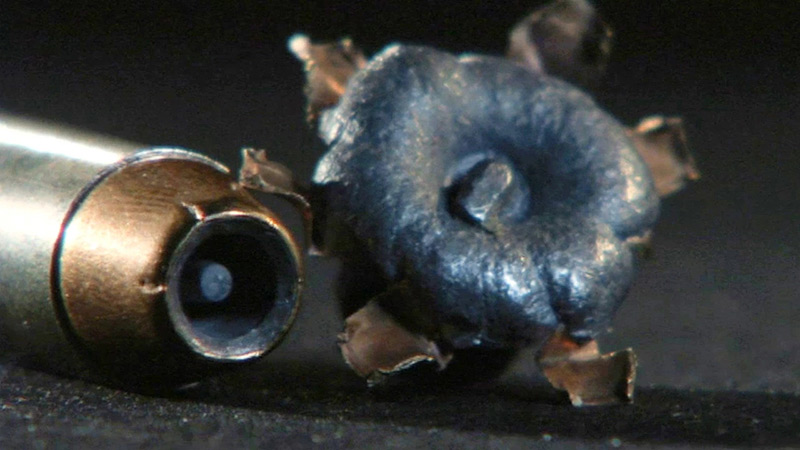
Federal Premium HST ammunition is designed to expand on impact, creating a bigger hole and penetrating deep because of its high weight retention and starfish-like shape.
But that wasn’t easy to accomplish. Why?
Because of terminal ballistics.
Terminal ballistics (also known as terminal performance) show how bullets behave and what kind of an effect they have when hitting and transferring energy to a target.
It’s one of the most critical characteristics of the bullet design, as it will determine the effectiveness of its impact.
The larger the expanded bullet’s frontal surface is, the less penetration there will be.
But, with the HST jacketed hollow point bullet, its six-pointed star frontal surface spreads out more than a typical rounded and expanded projectile — giving it both size and penetration capabilities in one.
HST Jacketed Hollow Point vs. Full Metal Jacket for Self-Defense
A relevant concern when choosing the right type of ammunition for home security and self-defense is over-penetration.
In other words, if the ammo will punch through barriers, or even the attacker, and potentially cause collateral damage.

A specially designed HST jacketed hollow-point (JHP) bullet is used for controlled penetration because of its expanding tip.
If you look closely at the image below, you’ll notice the pre-skived bullet and its sizable cavity. It’s designed to ensure the expansion of the projectile encountering the target.

This unique design prevents clogging (projectile expansion reduction) when traveling through barrier material (such as fabric), making sure the bullet still has an effective penetration.
HST JHP ammo is safer because it slows down when traveling through something like drywall. It doesn’t over-penetrate an attacker, reducing the chance of injuring an innocent bystander or a neighbor.
Full Metal Jacket (FMJ) ammunition, in comparison, has greater penetrating power. It’s not an ideal solution for personal protection situations.
That’s why Federal HST specially designed hollow point, is a very highly rated defensive ammo and a better choice.
Thousands of police officers trust their lives carrying JHP rounds as their primary handgun ammo, as it also passes the strict FBI test protocols with flying colors.
The FBI’s Test Protocols
The FBI’s ammo test protocols are the industry standard, and consist of a series of practically oriented tests that measure a bullet’s capabilities to repeatedly perform specific results.
The one test setting of a round considered good enough for police force use is the penetration testing protocol. It assesses the bullet’s ability to penetrate obstacles — usually found in real-life shooting scenarios — and still inflict effective damage.
The FBI performs six different tests by shooting into a 10-percent ballistic gel that simulates human tissue. Every round has to penetrate from 12 to 18 inches to pass.
The tests are intended to recreate real-life situations and include the following barriers:
- Automobile glass
- Plywood
- Wallboard
- Steel
- Heavy clothing
- Bare gelatin
How does Federal premium hold up to such tests, and is it a good self-defense choice?
Let’s find out.
Why Is Federal Premium Personal Defense a Favorite?
As civilians considering personal defense and home security, we should be most interested in how Federal premium performs in bare gelatin and against heavy clothing.
Following is a video of a test dealing with just this type of situation.
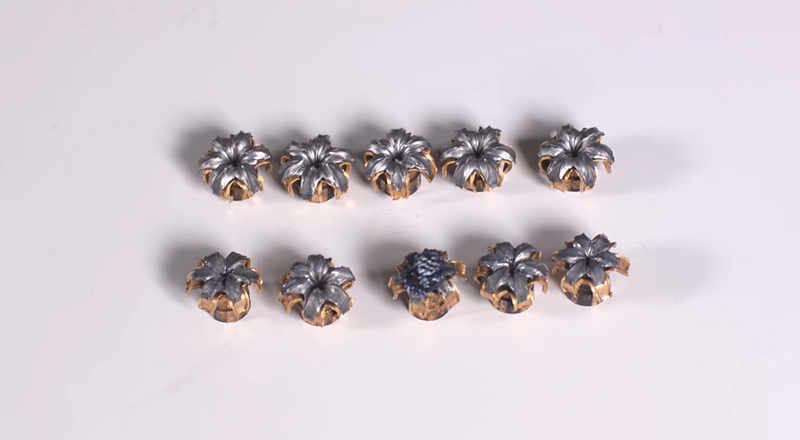
In essence, Federal 9mm HST has a superb and consistent expansion and penetration power of over 15 inches.
This makes it a perfect one-shot stop round for your home or self-defense handgun by all standards, including the FBI test protocol.
What Should You Expect From HST Federal 9mm Ammo?
This staple police officer and civilian 9mm ammo will bring you peace of mind. You’ll know that, if need be, you can protect your family and your home.
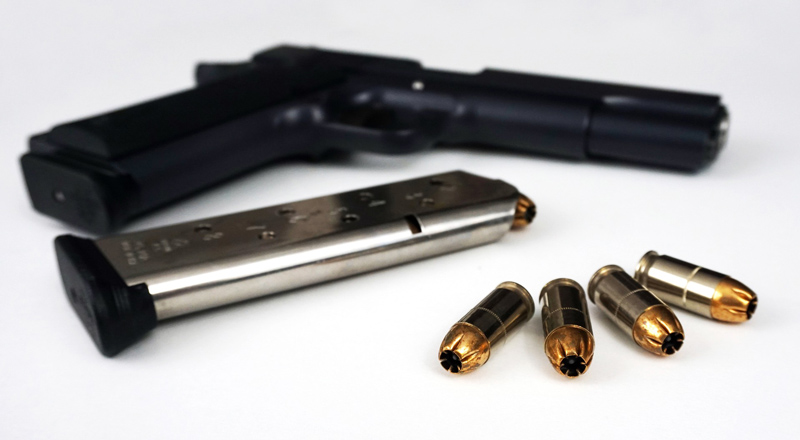
The jacketed hollow point is sure to overcome almost any real-life target obstacles while also providing the stopping power and penetration depth needed to permanently neutralize any threat.
Don’t forget, always practice what you carry and get your Federal Premium HST 9mm ammo in bulk today.
While defensive loads from Federal Premium Ammunition are built for protection, consistent practice should be done with more affordable range rounds. If you’re looking to cut costs without sacrificing trigger time, explore our guide on where to buy bulk handgun ammo for range use to keep your skills sharp and your budget intact.
Featured Image: Pixabay