
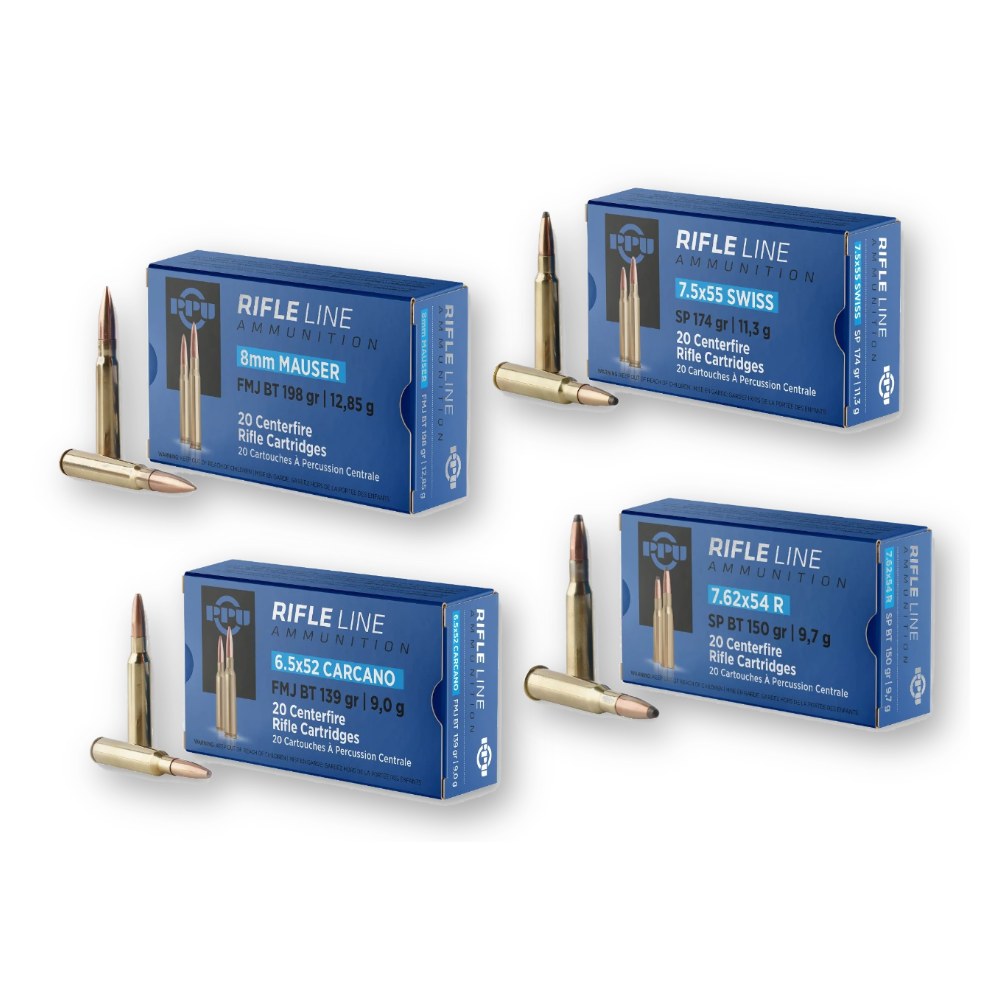
Military surplus rifles are some of the most rewarding guns to own. They carry real history, they are often built to a standard that modern budget rifles cannot match, and many of them shoot far better than their price suggests. The hard part is usually the ammunition. Many of these rifles use cartridges that have not been issued by any army in decades, several of them look almost identical to each other, and a few can be dangerous in the wrong rifle.
This guide matches the most common surplus rifles and pistols to the ammunition they need, explains the safety mix-ups that catch new owners, and covers what you should know about true surplus ammo versus new production, corrosive primers, and reloadable brass.
Quick Reference: Which Ammo Does My Surplus Rifle Use?
Find your rifle or pistol below. Always confirm the caliber marked on your barrel or receiver, since many military rifles were rebarreled, rechambered, or sold in more than one caliber over their service lives.
| Rifle or Pistol | Country | Cartridge |
|---|---|---|
| Mosin-Nagant M91 and M91/30, M44 carbine | Russia / USSR | 7.62x54R |
| Mauser Gewehr 98, K98k | Germany | 8mm Mauser (7.92×57) |
| Lee-Enfield SMLE, No. 4, No. 5 Jungle Carbine | United Kingdom and Commonwealth | 303 British |
| Swedish Mauser m/94, m/96, m/38 | Sweden | 6.5×55 Swedish |
| Swiss K31, K11, Model 1911 | Switzerland | 7.5×55 Swiss (GP 11) |
| MAS-36, MAS-49, MAS-49/56 | France | 7.5×54 French (7.5 MAS) |
| Carcano M91 rifles and carbines | Italy | 6.5×52 Carcano |
| Argentine Mauser 1891 and 1909, Belgian Mauser 1889 | Argentina, Belgium | 7.65×53 Argentine |
| Spanish Mauser 1893, Chilean and Mexican Mausers | Spain, Latin America | 7mm Mauser (7×57) |
| M1 Garand, M1903 Springfield, M1917 Enfield | United States | 30-06 Springfield |
| M1 Carbine | United States | 30 Carbine |
| SKS, AK-47, AKM | USSR and others | 7.62×39 |
| AK-74 | USSR and others | 5.45×39 |
| Mauser C96 “Broomhandle” | Germany | 7.63 Mauser |
| Tokarev TT-33, CZ 52 | USSR, Czechoslovakia | 7.62×25 Tokarev |
| Swiss Luger Model 1900 and 1906 | Switzerland | 7.65 Parabellum (30 Luger) |
| Luger P08 | Germany | 9mm Luger |
| Makarov PM | USSR, East Germany, Bulgaria | 9×18 Makarov |
| Webley Mk IV, Enfield No. 2 revolvers | United Kingdom | 38 S&W (38/200) |
| M1911 and M1911A1 | United States | 45 ACP |
The Look-Alike Cartridges That Cause Problems
Most ammo mix-ups with surplus guns come from cartridges that share a bullet diameter, a name, or a nearly identical case. These are the ones worth memorizing.
7.5×54 French vs 7.5×55 Swiss
These two look very similar, and both fire a bullet of about .30 caliber. They are not interchangeable. Never fire 7.5×55 Swiss in a French MAS rifle, or 7.5×54 French in a Swiss rifle. Check the headstamp and the box every time, especially if you own both.
7.63 Mauser vs 7.62×25 Tokarev
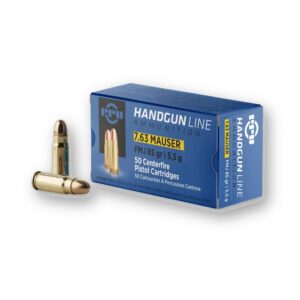
The Soviet Tokarev cartridge was based on the 7.63 Mauser, and the cases are nearly identical. The difference is pressure. Tokarev ammunition is loaded hotter and is generally not suited to the Mauser C96. Going the other way is fine: the milder 7.63 Mauser can be fired in Tokarev pistols. If you own a Broomhandle, buy 7.63 Mauser ammo made for it.
7.5×55 Swiss in the Model 1889 Schmidt-Rubin
Modern 7.5×55 Swiss ammunition is loaded to GP 11 specifications, the more powerful load adopted in 1911. GP 11 pressure is not safe in the original Model 1889 Schmidt-Rubin rifle. It is the correct ammunition for the K11, K31, and Model 1911 rifles. If you are not sure which Swiss rifle you have, have a gunsmith identify it before you shoot it.
38 S&W vs 38 Special
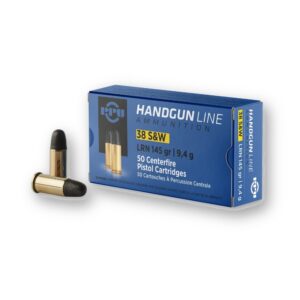
British Webley and Enfield service revolvers use 38 S&W, which the British military loaded as the 38/200. It is shorter and wider than 38 Special, with a slightly larger bullet, and the two are not interchangeable. 38 Special will not fit a 38 S&W cylinder and should never be forced. Some Webleys were also altered over the years, so check what your cylinder is actually chambered for.
7.62x54R vs 7.62×51 vs 7.62×39
Three different cartridges share the 7.62 name. 7.62x54R is the rimmed Mosin-Nagant round. 7.62×51 NATO is essentially the military version of 308 Winchester. 7.62×39 is the shorter intermediate cartridge used in the SKS and AK. None of them interchange. If you own a Mosin, you need 7.62x54R.
9×18 Makarov vs 9mm and 380
Makarov pistols use 9×18 Makarov, which has a slightly larger bullet than 9mm Luger or 380 ACP. It is not the same as either one. Only fire 9×18 in pistols chambered for it.
8mm Mauser J-Bore vs S-Bore
Most 8mm Mauser rifles, including the K98k, use the later S-bore with a .323-inch bullet. Some early rifles, such as the German Commission Rifle of 1888, were built with the original J-bore, which takes a smaller bullet of about .318 inches. Firing modern .323 ammunition in a J-bore rifle can raise pressure to dangerous levels. If you have an early or unusual 8mm rifle, have the bore checked before shooting it.
30 Luger vs 9mm Luger
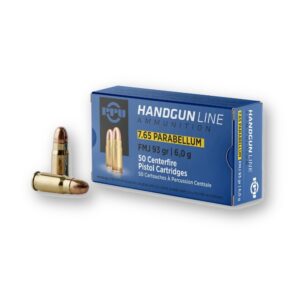
The Luger pistol was first built in 7.65 Parabellum, also called 30 Luger, and 9mm Luger was developed from it. Swiss Lugers and some commercial Lugers are chambered in 7.65 Parabellum, while German military P08 Lugers are 9mm. Check the barrel marking before buying ammo.
A Few Rifle-Specific Notes
M1 Garand: Watch the Pressure Curve
The M1 Garand is a gas-operated rifle designed around M2 Ball 30-06 ammunition. Heavy bullets and some modern hunting loads can produce higher pressure at the gas port, which puts extra stress on the operating rod. Shooters generally stick with M2 Ball-equivalent loads, typically a 150gr-class bullet at M2 Ball velocity, or use an adjustable gas plug for other loads.
Carcano: The Bore Size Issue
Original Carcano barrels were cut for bullets of roughly .267 to .268 inches, while most current factory 6.5×52 Carcano ammo uses a standard .264-inch bullet. In some rifles the smaller bullet does not fully engage the rifling, which can open up groups. Results vary from rifle to rifle, so do not judge a Carcano until you have tried a box or two.
Spanish Mausers and Older 7mm Rifles
7mm Mauser has been loaded for more than a century, and older rifles vary widely in condition. U.S. factory 7×57 ammunition is loaded to modest pressure partly out of respect for older rifles still in use. Even so, any older military rifle should be checked by a qualified gunsmith before you shoot it, especially if its history is unknown.
True Surplus Ammo vs New Production
The term “surplus ammo” gets used loosely. True military surplus is ammunition an army made for its own use and later sold off, sometimes decades after it was loaded. New production ammunition is made today by commercial manufacturers specifically for collectors and shooters who own these rifles.
Both have a place, but they are different products:
- True surplus is often very inexpensive when it is available, but supply comes and goes, it may be decades old, and much of it uses corrosive primers and Berdan-primed cases.
- New production costs more per round, but it is consistent, non-corrosive, and usually loaded in boxer-primed brass cases that can be reloaded.
For many of the less common surplus calibers, like 7.5×54 French, 7.65×53 Argentine, and 6.5×52 Carcano, true surplus has largely dried up. New production from makers like PPU (Prvi Partizan) is now the most reliable way to keep these rifles fed.
Corrosive Ammo: What It Is and How to Clean Up After It
Much of the military ammunition made before the 1950s, and a good deal of Eastern Bloc ammunition made after that, uses corrosive primers. These primers leave behind salts, mainly potassium chloride, in the barrel and action. The salts attract moisture and cause rust, sometimes within a day or two.
Corrosive ammo is perfectly safe to shoot. You just have to clean properly the same day:
- Use water first. Ordinary gun solvents and oils do not dissolve the salts. Run hot water, or a water-based cleaner, through the bore and over the bolt face.
- Do not forget the gas system. On gas-operated rifles like the SKS, AK, and M1 Garand, the gas piston, gas tube, and gas port are exposed to the same residue.
- Clean the muzzle device and bolt. Flash hiders, muzzle brakes, and the bolt face all collect residue.
- Then clean normally. Once the salts are flushed out, dry everything, run your usual solvent, and finish with a light coat of oil.
If you are not sure whether your ammo is corrosive, treat it as corrosive and clean accordingly. Modern commercial ammunition, including the PPU loads we carry for these calibers, is non-corrosive.
Berdan vs Boxer Primers
If you reload, primer type matters.
- Boxer primers have the anvil built into the primer and use a single, centered flash hole. They are easy to remove with standard decapping dies, which makes boxer-primed brass easy to reload.
- Berdan primers have the anvil formed into the case itself, with two or more flash holes. They can be reloaded with special tools, but most reloaders do not bother.
Most true military surplus is Berdan primed. Most new production for surplus calibers, including PPU, is boxer primed brass, which is a big advantage if you plan to reload for a hard-to-find cartridge.
Steel Case, Brass Case, and Your Surplus Rifle
Many surplus rifles were designed around steel-cased or brass-cased ammunition, and most will run either. Steel-cased ammo is usually cheaper and works well in rifles like the SKS, AK, and Mosin-Nagant. Brass is the better choice if you reload, and it is the only practical option in many of the rarer calibers. For a deeper comparison, see our guide to brass vs steel ammo.
Before You Shoot Any Surplus Rifle
Old military rifles are generally robust, but many have been through wars, arsenal rebuilds, and decades of storage. A few precautions go a long way:
- Confirm the chambering from the barrel markings, not just the rifle’s model name.
- Have headspace checked by a gunsmith, especially on rifles with mismatched bolts.
- Inspect the bore for heavy pitting or obstructions. Cosmoline and old grease should be cleaned out completely.
- Start with new production ammo of known quality before trying unknown surplus lots.
- Wear eye and ear protection, as always.
A Brief History of the Classic Surplus Cartridges
7.62x54R (1891)
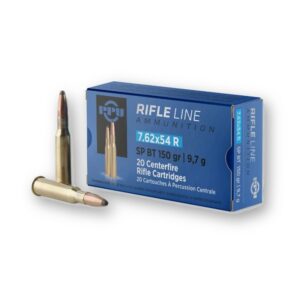
Adopted by Imperial Russia with the Mosin-Nagant in 1891, 7.62x54R remained in front-line Soviet and Russian service for more than a century in rifles, machine guns, and sniper rifles. It is one of the longest-serving military cartridges in history.
8mm Mauser (1888)
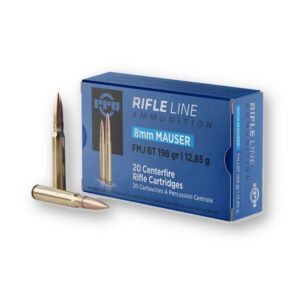
Germany adopted the 7.92×57 cartridge in 1888, then switched to the improved S-bore and spitzer bullet in 1905. It armed German forces through both World Wars in the Gewehr 98 and K98k, and many other countries adopted it as well.
303 British (1888)
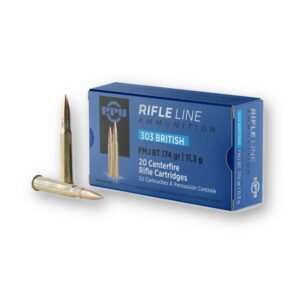
Britain adopted 303 British in 1888 and kept it as the service rifle cartridge through both World Wars and into the 1950s, in the Lee-Metford and Lee-Enfield family of rifles and the Vickers and Bren guns.
6.5×55 Swedish (1894)
Developed for Sweden and Norway in the 1890s, 6.5×55 earned a reputation for accuracy and mild recoil. It remains a popular hunting and target cartridge in Scandinavia today.
7.5×55 Swiss (1889 and 1911)
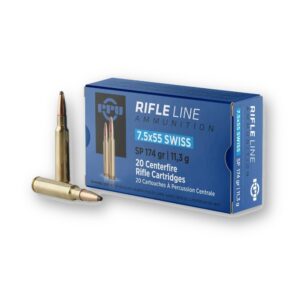
Switzerland adopted its first 7.5mm cartridge in 1889 for the Schmidt-Rubin rifle, then adopted the more powerful GP 11 load in 1911. The K31 straight-pull carbine that followed is famous for its accuracy.
7.5×54 French (1929)
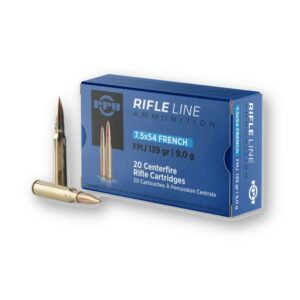
France adopted 7.5×54 MAS in 1929 to replace the 8mm Lebel. It served in the MAS-36 and MAS-49 rifles and in French machine guns into the Cold War.
6.5×52 Carcano (1890)
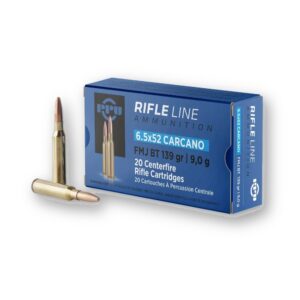
Italy adopted the Carcano cartridge in 1890, followed by the Model 1891 rifle. It served through both World Wars, and large numbers of Carcano rifles were later imported to the U.S. as surplus.
7.65×53 Argentine (1889)
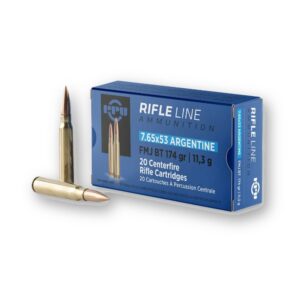
This cartridge entered service with the Mauser Model 1889, built in Belgium. Argentina adopted it for its Model 1891 Mauser, which is why it is still widely called 7.65 Argentine.
7mm Mauser (1892)
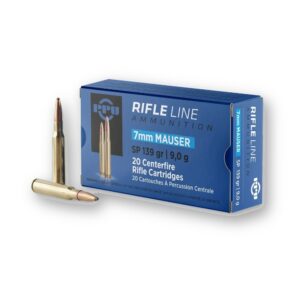
Paul Mauser designed 7×57 in 1892, and Spain adopted it with the Model 1893 rifle. Spanish troops used it against U.S. forces at San Juan Hill in 1898, and it later became a classic hunting cartridge.
7.63 Mauser and 7.65 Parabellum (1890s)
7.63 Mauser was designed in 1896 for the C96 pistol. 7.65 Parabellum followed in 1898 for the Luger, and Switzerland adopted it in 1900 as the first military to standardize the cartridge. 9mm Luger was developed from it.
Shop Ammo for Your Surplus Rifle
We carry new production, boxer-primed ammunition for many classic military calibers, including 7.5×55 Swiss, 7.5×54 French, 6.5×52 Carcano, 7.65×53 Argentine, 7mm Mauser, 8mm Mauser, 7.62x54R, and 303 British. Stock on these calibers moves quickly, so check the category pages for what is ready to ship. Every in-stock order ships the next business day from our Knoxville, TN warehouse.
Frequently Asked Questions
Can I shoot 7.5×55 Swiss in a French MAS-36?
No. 7.5×55 Swiss and 7.5×54 French look similar but are different cartridges and must never be interchanged.
Is it safe to shoot Tokarev ammo in a Mauser C96?
It is not recommended. 7.62×25 Tokarev is loaded hotter than 7.63 Mauser and is generally not suited to the C96. The milder 7.63 Mauser can be fired in Tokarev pistols.
How do I clean my rifle after shooting corrosive ammo?
Clean the same day. Flush the bore, bolt face, gas system, and muzzle device with hot water or a water-based cleaner to dissolve the corrosive salts, dry everything, then clean with your usual solvent and finish with a light coat of oil.
Is new production surplus caliber ammo reloadable?
Usually yes. Most new production ammunition for surplus calibers, including PPU, uses boxer-primed brass cases that can be reloaded with standard equipment. Most true military surplus uses Berdan primers, which are much harder to reload.